
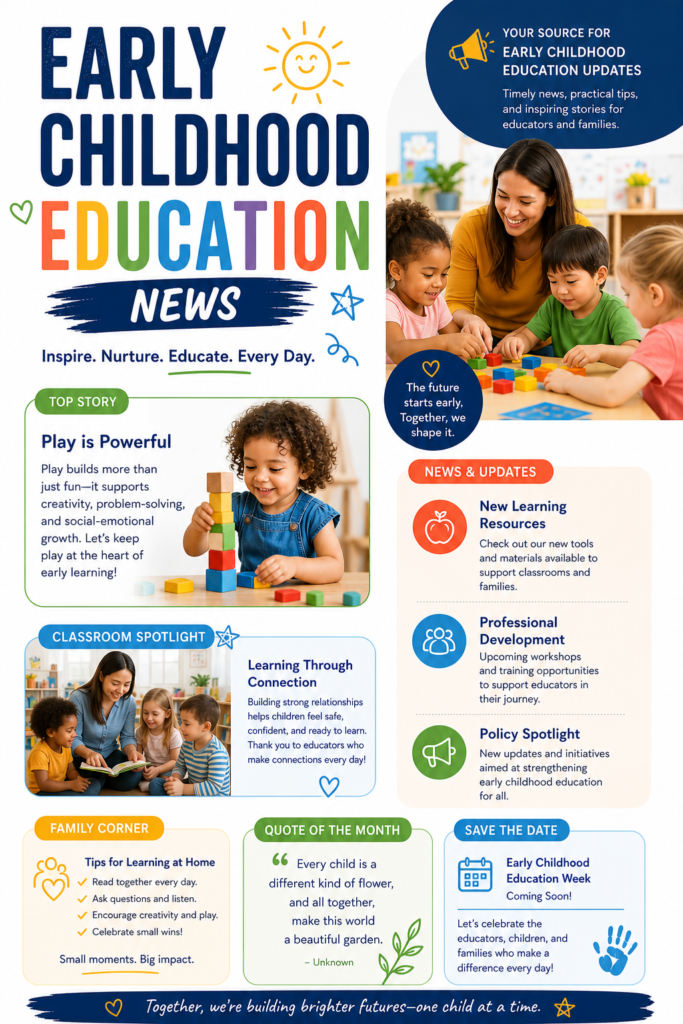

Early childhood education continues to be one of the most important pillars of human development and long-term societal progress. The early years of a child’s life shape cognitive abilities, emotional intelligence, social behavior, and future academic success. Because of this, early childhood education news has become a highly important topic globally, especially in 2026, where education systems are rapidly evolving due to technology, policy changes, and new research findings.
Across the world, governments, educators, and researchers are focusing more on improving early learning environments, teacher training, curriculum development, and accessibility. This article explores the latest updates, trends, and developments in early childhood education, giving a complete overview of what is happening in this critical education sector in 2026.
Global Importance of Early Childhood Education in 2026
Early childhood education (ECE) is now widely recognized as the foundation of lifelong learning. In 2026, countries are investing more resources into early education systems because studies consistently show that children who receive quality early education perform better academically and socially later in life.
The focus of early childhood education news globally is centered on equal access, quality improvement, and early intervention programs. Governments are working to ensure that children from all socioeconomic backgrounds have access to preschool education and developmental support.
International organizations such as UNESCO and UNICEF continue to highlight the importance of early learning programs, especially in developing countries where access to education is still limited. These efforts aim to reduce inequality and improve long-term educational outcomes worldwide.
Major Policy Changes in Early Childhood Education Systems
One of the most significant updates in early childhood education news in 2026 is the introduction of new education policies in several countries. Governments are revising curriculum standards, increasing funding for preschools, and implementing stricter teacher qualification requirements.
Many countries have made preschool education compulsory or partially mandatory for children aged 3 to 5. This ensures that children enter primary school with basic literacy, numeracy, and social skills.
In addition, governments are focusing on reducing class sizes and improving teacher-to-student ratios. This allows educators to provide more personalized attention to each child, which is essential during early development stages.
Policy reforms are also emphasizing inclusive education, ensuring that children with disabilities or learning difficulties receive proper support from an early age.
Technology Integration in Early Childhood Education
Technology is playing a major role in shaping early childhood education news in 2026. Digital learning tools, interactive apps, and smart classrooms are becoming common in preschools and early learning centers.
Educational apps designed for young children now focus on interactive storytelling, basic math skills, language development, and creative thinking. These tools make learning more engaging and personalized.
Smart boards, tablets, and AI-based learning platforms are also being introduced in classrooms. These technologies help teachers track student progress and identify learning gaps early.
However, educators are also careful about balancing screen time. Experts emphasize that technology should support, not replace, traditional learning methods such as play-based and hands-on activities.
Focus on Play-Based and Experiential Learning Methods
A major trend highlighted in early childhood education news is the increasing focus on play-based learning. Research shows that children learn best through play, exploration, and real-world interaction.
In 2026, many early learning centers are moving away from rigid academic structures and adopting more flexible learning environments. Children are encouraged to learn through games, storytelling, role-play, and group activities.
Experiential learning helps children develop creativity, problem-solving skills, and emotional intelligence. It also improves communication and social interaction skills, which are essential for future success.
Teachers are being trained to design activities that promote curiosity and active participation rather than passive memorization.
Teacher Training and Professional Development Improvements
Teachers play a crucial role in early childhood education, and early childhood education news in 2026 shows a strong focus on improving teacher training programs.
Many countries are introducing advanced certification programs for early childhood educators. These programs focus on child psychology, modern teaching techniques, and classroom management strategies.
Continuous professional development is also becoming mandatory in many regions. Teachers are encouraged to attend workshops, training sessions, and online courses to stay updated with new teaching methods.
In addition, there is a growing emphasis on emotional intelligence training for educators. Teachers are being trained to better understand children’s emotional needs and respond effectively to behavioral challenges.
Early Childhood Mental Health and Emotional Development
Mental health awareness has become a key part of early childhood education news in 2026. Educators and parents are now more aware of the importance of emotional development during early childhood.
Schools are introducing programs that focus on emotional intelligence, stress management, and social skills development. Children are being taught how to express emotions, resolve conflicts, and build healthy relationships.
Counselors and child psychologists are also being integrated into early education systems to support children facing emotional or behavioral challenges.
This shift reflects a growing understanding that emotional well-being is just as important as academic learning in early childhood development.
Parental Involvement in Early Education Growth
Parental involvement is another major focus in early childhood education news. Studies show that children perform better when parents are actively involved in their learning process.
In 2026, schools are encouraging stronger collaboration between parents and teachers. Regular communication, parent-teacher meetings, and digital progress tracking tools are becoming standard practice.
Many schools are also offering parenting workshops to help parents support their children’s learning at home. These programs focus on reading activities, behavior management, and early development milestones.
The goal is to create a strong partnership between home and school to support the child’s overall development.
Challenges Facing Early Childhood Education Systems
Despite progress, early childhood education news also highlights several ongoing challenges. One of the biggest challenges is unequal access to quality education, especially in rural and low-income areas.
Another issue is the shortage of trained early childhood educators. Many regions still struggle to recruit and retain qualified teachers due to low salaries and high workload.
Infrastructure limitations also affect learning quality in some areas. Many schools lack proper classrooms, learning materials, and digital tools.
Additionally, balancing technology use in early education remains a concern, as excessive screen time can negatively impact child development if not managed properly.
Innovations and Future Trends in Early Childhood Education
The future of early childhood education looks promising, with several innovations shaping early childhood education news in 2026.
Artificial intelligence is being used to create personalized learning experiences for children. AI systems can adapt lessons based on a child’s learning speed and ability.
Virtual reality (VR) and augmented reality (AR) are also being introduced in some advanced learning centers to create immersive educational experiences.
Another major trend is the development of hybrid learning models that combine physical classroom learning with digital platforms.
Sustainability education is also becoming important, teaching children about environmental awareness from an early age.
Government and Global Organization Initiatives
Governments and international organizations are playing a key role in improving early childhood education systems worldwide.
Funding programs are being introduced to build new preschools and improve existing facilities. Scholarships and support programs are also helping underprivileged families access early education.
Global organizations are conducting research and publishing reports on best practices in early learning systems. These insights are helping countries improve their education policies.
The focus of early childhood education news in 2026 shows a strong global commitment to making early education more accessible, inclusive, and effective.
Conclusion: The Future of Early Childhood Education
Early childhood education is entering a new era of innovation, inclusivity, and global awareness. The developments highlighted in early childhood education news in 2026 show that the world is prioritizing early learning like never before.
From technology integration and policy reforms to teacher training and mental health support, every aspect of early education is evolving to better support children’s development.
While challenges still exist, the overall direction is positive. With continued investment, collaboration, and innovation, early childhood education will continue to improve and shape a brighter future for the next generation.