
Metrolink is the largest light rail tram system in the United Kingdom and serves as the backbone of public transport across Greater Manchester. Every day, thousands of commuters, students, tourists, and residents rely on the network to travel quickly and efficiently between towns, city centres, shopping districts, airports, and business hubs.
With its extensive network, modern trams, and convenient ticketing system, Metrolink has become an essential part of daily life in Greater Manchester. Whether you are visiting the area or commuting to work, understanding how the network operates can make your journey much easier.
What Is Metrolink?
Metrolink is a light rail transport system that connects Manchester city centre with many surrounding towns and districts. Unlike traditional rail services, trams run frequently throughout the day and stop at numerous stations, making local travel convenient.
The network links residential communities with commercial centres, universities, sports venues, hospitals, and tourist attractions.
Today, this is widely recognised as one of the UK’s most successful urban transport systems.
Extensive Route Network
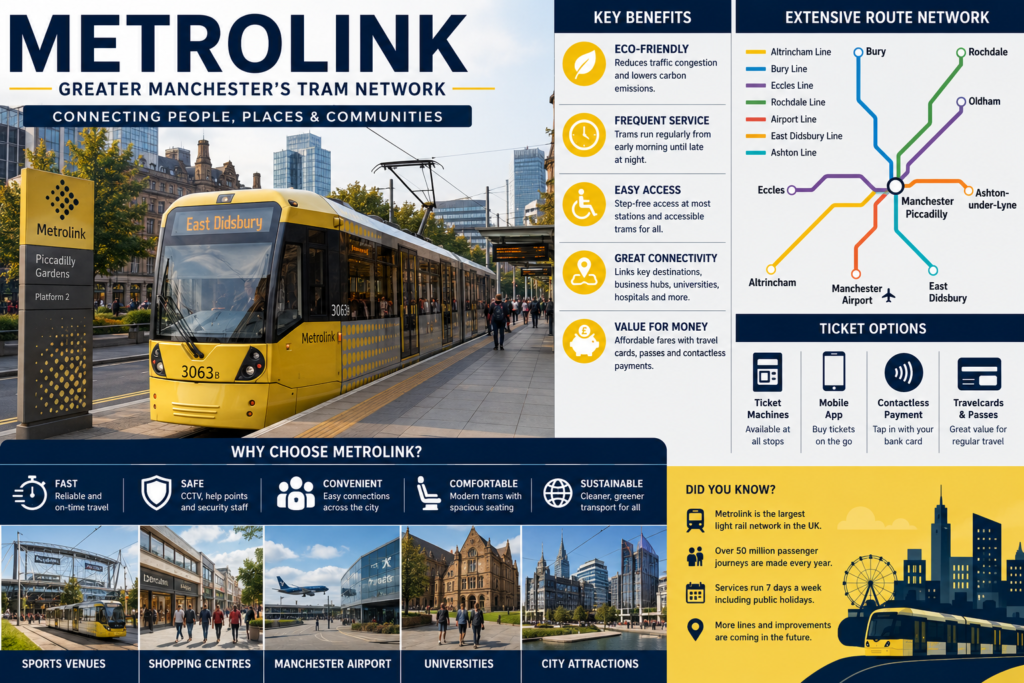
One of the biggest strengths of Metrolink is its wide coverage.
The tram network connects many important locations, including:
- Manchester City Centre
- Altrincham
- Bury
- Rochdale
- Oldham
- Eccles
- Ashton-under-Lyne
- East Didsbury
- Manchester Airport
- Trafford Centre
These routes allow passengers to travel without relying heavily on private vehicles.
Modern and Comfortable Trams
The Metrolink fleet is designed with passenger comfort in mind.
Modern trams feature:
- Spacious seating
- Standing areas
- Air-conditioned interiors
- Digital passenger information displays
- CCTV security
- Wheelchair accessibility
The clean and well-maintained vehicles provide a comfortable experience for both short and long journeys.
Easy Ticketing System
Buying tickets for Metrolink is straightforward.
Passengers can purchase tickets through:
- Ticket machines
- Mobile apps
- Contactless bank cards
- Travelcards
- Day passes
The network uses a zonal fare system, allowing travellers to pay according to the number of zones they cross during their journey.
A Sustainable Transport Option
Public transport plays a major role in reducing traffic congestion and lowering emissions.
Metrolink supports environmental sustainability by:
- Reducing car dependency
- Lowering carbon emissions
- Encouraging public transport use
- Supporting greener cities
- Improving air quality
Many commuters choose trams as an environmentally friendly alternative to driving.
Convenient for Tourists
Visitors to Greater Manchester often find Metrolink to be the easiest way to explore the region.
Popular destinations accessible by tram include:
- Shopping centres
- Museums
- Football stadiums
- Entertainment venues
- Universities
- Manchester Airport
The frequent service means tourists can move around the city without worrying about parking or heavy traffic.
Accessibility for Everyone
Accessibility remains one of Metrolink’s strongest features.
Passengers benefit from:
- Step-free station access
- Dedicated wheelchair spaces
- Priority seating
- Audio announcements
- Visual information screens
- Easy platform access
These features help ensure that travel is comfortable for people with different mobility needs.
Supporting the Local Economy
It contributes significantly to Greater Manchester’s economy.
Reliable transport helps:
- Employees reach the workplaces
- Students attend universities
- Businesses attract customers
- Visitors explore local attractions
- Retail centres increase foot traffic
The network also encourages investment by improving connectivity across the region.
Safety and Reliability
Passenger safety is a top priority across the Metrolink system.
Security measures include:
- CCTV monitoring
- Emergency help points
- Well-lit stations
- Regular maintenance
- Professional staff
- Safety announcements
Frequent services also reduce waiting times, making travel more convenient throughout the day.
Future Improvements
As Greater Manchester continues to grow, Metrolink is expected to evolve alongside it.
Future priorities may include:
- Service improvements
- Increased tram frequency
- Station upgrades
- Better passenger facilities
- Enhanced digital ticketing
- Sustainable transport initiatives
Continuous investment helps ensure the network meets the changing needs of residents and visitors.
Why Metrolink Matters
Metrolink has transformed the way people travel across Greater Manchester. It offers a practical, reliable, and environmentally responsible alternative to private cars while connecting communities with jobs, education, healthcare, and entertainment.
Its combination of affordability, accessibility, and extensive coverage has made it one of the region’s most valuable public transport services.
Whether you’re commuting to work, heading to the airport, or exploring the city’s attractions, it provides a fast and convenient travel solution.
Final Thoughts
Metrolink continues to play a vital role in Greater Manchester’s transport system. Its extensive route network, modern trams, simple ticketing options, and commitment to sustainability make it one of the UK’s leading light rail services.
As the region continues to develop, it will remain an important part of everyday travel, supporting economic growth, reducing congestion, and helping people reach their destinations safely and efficiently.
FAQs
What is Metrolink?
This is Greater Manchester’s light rail tram network, connecting Manchester city centre with surrounding towns and major destinations.
How do I buy a Metrolink ticket?
You can purchase tickets from station ticket machines, mobile apps, contactless payment systems, and travel passes.
Does Metrolink serve Manchester Airport?
Yes. The tram network provides direct services to Manchester Airport, making travel convenient for passengers.
Is Metrolink accessible for wheelchair users?
Yes. Most stations offer step-free access, and trams include dedicated wheelchair spaces and accessible features.
Why is Metrolink important?
This improves connectivity, supports the local economy, reduces traffic congestion, and offers an environmentally friendly transport option across Greater Manchester.